
Everyone does Uluru, and fair enough — it earns the hype. But the rock is the outback's front door, not its living room. Scattered across the red middle of the country are places just as jaw-dropping with a fraction of the crowds: canyons you swim through, a town that lives underground, waterholes older than the dinosaurs. Backpackers who make it to these spots come home with the stories nobody else at the hostel has.
Here are five worth rearranging a trip for — and the prep that keeps outback travel a story rather than an incident.
Karijini National Park, WA
The best national park most travellers have never heard of. In the Pilbara, about 1,400 km north of Perth, Karijini is a maze of 2.5-billion-year-old slot gorges — you climb down into the earth and swim through narrow red chasms to waterfalls and spa-like pools at Hancock, Weano and Hamersley Gorge. Entry is about $17 per vehicle, camping from $11 a night, and the season is April–October (summer is dangerously hot). It's remote — the nearest proper town, Tom Price, is an hour away — which is exactly why you might get Fern Pool almost to yourself at 8am.
Coober Pedy, SA
The opal capital of the world, 846 km north of Adelaide on the Stuart Highway, where summer heat drove the whole town underground. People live, drink and worship in "dugouts" carved into the rock — you can sleep in an underground hostel for around $40 a night, fossick for opals in the mullock heaps, and take in the moonscape of the Breakaways at sunset (parts of Mad Max were shot here for a reason). It's the perfect weird overnight stop on the Adelaide–Alice run, and utterly unlike anywhere else in the country.
The MacDonnell Ranges, NT
Alice Springs' backyard and criminally skipped by people racing to Uluru. The West Macs string a series of gorges and icy waterholes along 130-odd km — Ellery Creek Big Hole, Ormiston Gorge, Redbank Gorge under the shadow of Mt Sonder — most of them free, most swimmable, all spectacular. The East Macs (Trephina Gorge, the ruins at Arltunga) see even fewer people. Keen hikers: the Larapinta Trail runs 223 km through the range, and you can day-walk its best sections without committing to the full trek.
Nitmiluk (Katherine Gorge), NT
Thirteen sandstone gorges strung along the Katherine River, 30 km from Katherine town and an easy add to any Darwin–Alice drive. The move here is renting a canoe (around $60 a half day) and paddling into the silence, or hiking up to Baruwei Lookout at dawn. Nearby Edith Falls (Leliyn) has one of the Top End's great swimming holes. Dry season only for swimming — this is croc country, and the rangers' signs are the law.
The Flinders Ranges, SA
The accessible outback: 450 km north of Adelaide, no 4WD required. The centrepiece is Wilpena Pound, a natural rock amphitheatre 17 km long that looks engineered by giants — walk to Wangara Lookout or split a scenic flight over it (from about $250 each). Ridge-top drives, 800-million-year-old geology, emus wandering through camp and some of the best stargazing in the hemisphere. Park entry ~$13 per vehicle, camps from ~$15.
Doing it safely (the unskippable bit)
The outback isn't dangerous because of snakes or spiders — it's dangerous because of distance, heat and complacency. The rules are simple and they're the same ones locals live by:
- Water: carry 4–5 litres per person per day, plus a 10 L reserve in the vehicle. Always.
- Fuel: top up at every town; gaps of 200–300 km between servos are normal, and remote fuel costs $2.60–$3.00 a litre — budget for it rather than risking it.
- Tell someone. Leave your route and ETA with a friend or your hostel, and check in when you arrive. Phone coverage vanishes outside towns; for genuinely remote legs, a personal locator beacon (about $300 to buy, far less to hire) is cheap insurance.
- If you break down, stay with the vehicle. It's shade, water storage, and visible from the air. Walkers die out here; waiters get found.
- Drive dawn-to-dusk only — kangaroos at twilight write off cars daily — and check road conditions after rain, when outback dirt turns to glue.
The outback doesn't punish adventure. It punishes shortcuts — the skipped fuel stop, the "she'll be right" water supply, the gravel road nobody knew you took.
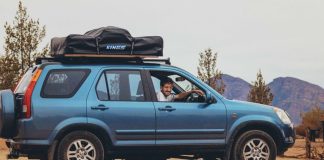
Gear-wise, a well-set-up camper with decent clearance handles everything on this list except Karijini's rougher tracks after rain — Travellers Autobarn hires backpacker campers with unlimited kilometres, just confirm which unsealed roads your agreement allows before you commit to a route. And make sure your insurance actually covers remote-area mishaps and the activities you're planning; World Nomads insurance is built for exactly this kind of trip. Then go — the emptiest map squares are where Australia keeps the good stuff.
Tools, die wir dafür feiern
$45/day all-in, unlimited km, one-way drops between cities.
Covers surf, dive, hike. ~$4/day for a year.